
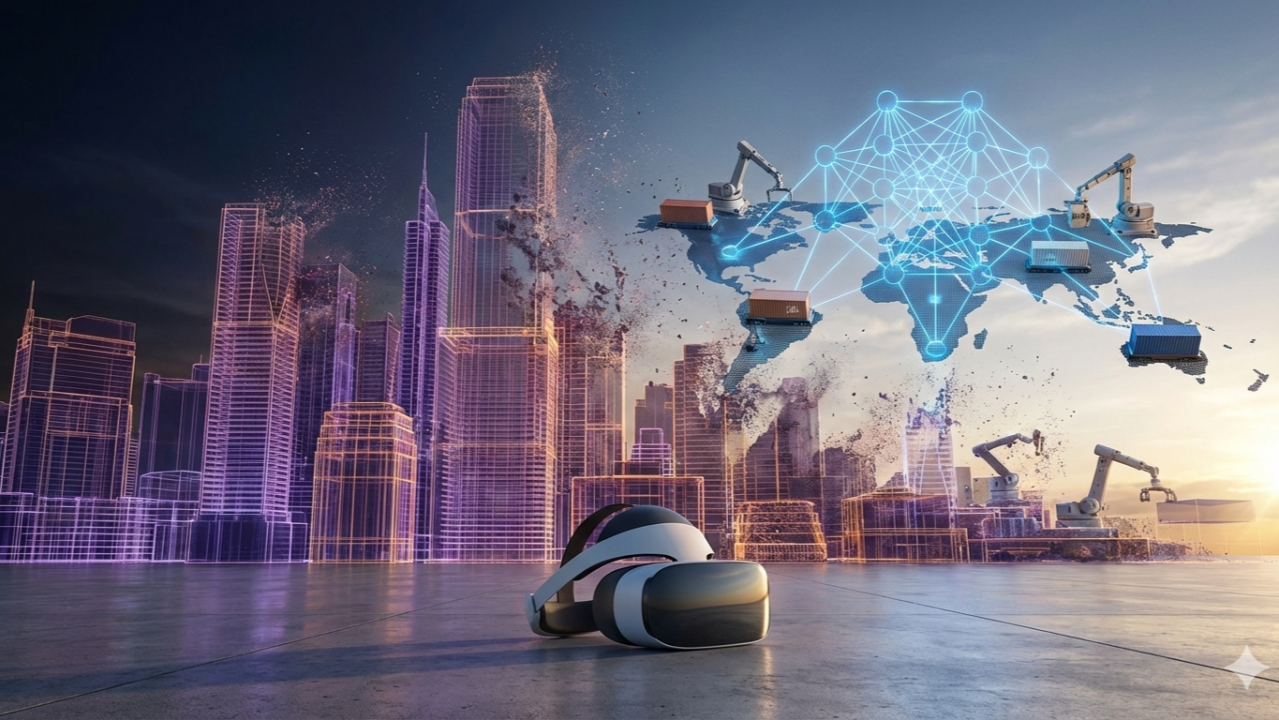
In the world of big tech, some numbers are so massive they begin to feel like background noise. For Meta, a $4 billion quarterly loss in its Reality Labs division has become exactly that: a predictable, almost rhythmic financial drain. While a loss of that magnitude would be catastrophic for most, for the company behind Facebook and Instagram, it is simply business as usual.
The $83.5 Billion Reality Check
Since 2021, Meta has poured a staggering $83.5 billion into its AR and VR ambitions. Across 21 consecutive quarterly reports, the division responsible for Quest headsets and Horizon Worlds has averaged a $4 billion loss every three months.
Despite this “metaverse sinkhole,” Meta’s core business remains a cash engine. In the first quarter of 2026, the company reported:
- Net Income: $26.8 billion (a 61% year-over-year increase)
- Revenue: $56.3 billion (up 33% from the previous year)
A More Expensive Frontier: AI Infrastructure
While the metaverse was once the primary focus of Mark Zuckerberg’s long-term vision, the goalposts have shifted toward artificial intelligence. Meta is now locked in a high-stakes arms race with OpenAI and Anthropic.
To stay competitive, Meta recently launched its overhauled AI model, Muse Spark, following a massive talent raid where they poached over 50 researchers from rivals. However, building “superintelligence” is proving even more expensive than building virtual worlds. Meta has raised its 2026 spending forecast to between $125 billion and $145 billion, driven by the rising costs of hardware components and memory.
Investor Anxiety and the “Dynamic” Future
Despite the record-breaking profits, Wall Street remains uneasy. During a recent earnings call, CEO Mark Zuckerberg emphasized a focus on investment efficiency, but CFO Susan Li admitted that the company has consistently underestimated its compute needs.
When pressed for a 2027 outlook, the leadership offered little certainty, describing their current strategy as a “dynamic planning process.” This lack of a clear spending ceiling caused Meta’s stock to slide more than 5% in after-hours trading.
For those looking to track these shifts in real-time, industry leaders will be gathering to discuss the future of venture capital and tech at StrictlyVC San Francisco and TechCrunch Disrupt 2026. For now, Meta seems content to spend whatever it takes to own the next era of computing, whether that be through a headset or an algorithm.