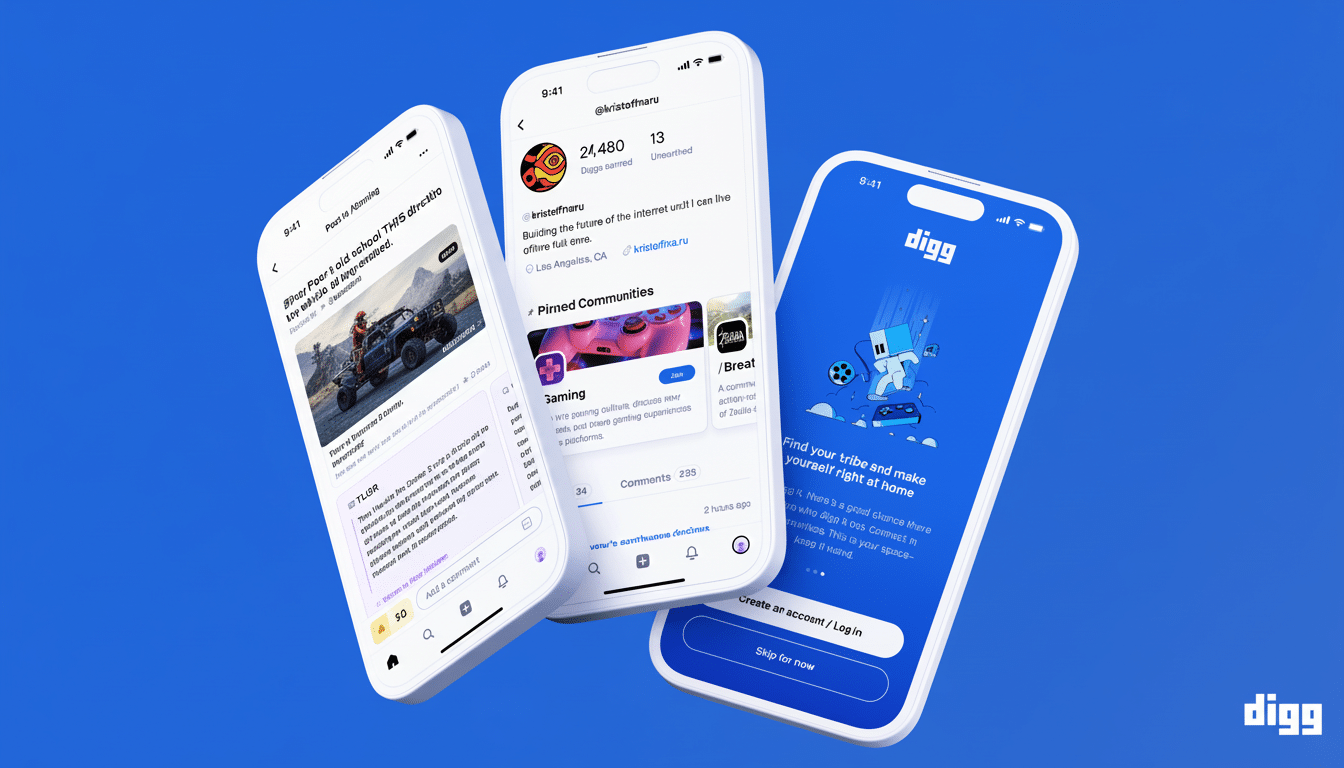
The ambitious attempt to revive Digg has hit a significant roadblock. Despite a high-profile relaunch spearheaded by original founder Kevin Rose and Reddit co-founder Alexis Ohanian, the company has announced a major restructuring that includes staff layoffs and the removal of its mobile app from the App Store.
The Bot Invasion and the “Dead Internet”
The primary catalyst for this retreat is a phenomenon often called the “dead internet theory.” CEO Justin Mezzell revealed that the platform was immediately besieged by sophisticated AI agents and SEO spammers upon its beta launch. Because Digg’s core value proposition relied on human-voted rankings to surface quality content, the influx of automated accounts rendered the voting system untrustworthy.
Despite banning tens of thousands of accounts and deploying both internal tools and external vendor solutions, the company admitted it was unprepared for the scale and speed of the automation. Mezzell noted that this isn’t just a Digg problem, but a systemic crisis facing the modern web where bots are increasingly indistinguishable from real users.
Leadership Shifts and Competitive Walls
In response to these struggles, Kevin Rose is returning to Digg as his primary focus. While he will maintain his advisory role at True Ventures, he is stepping back into the driver’s seat to steer the company through its “retooling” phase.
The startup originally aimed to offer a community-owned alternative to established forums. However, Mezzell described the dominance of existing rivals—a clear nod to platforms like Reddit—as more than just a competitive moat; he characterized it as a “wall” that proved nearly impossible to scale with their current strategy.
What Stays and What Goes
While the Digg app has been shuttered and the website currently hosts only the layoff announcement, the brand isn’t disappearing. A small, lean team remains to develop a version of Digg that is “genuinely different.” Furthermore, the Diggnation podcast will continue to produce content.
This pivot follows a leveraged buyout last year involving Seven Seven Six, S32, and True Ventures. For now, the link-sharing pioneer is entering a quiet period of soul-searching as it attempts to navigate an AI-saturated landscape.