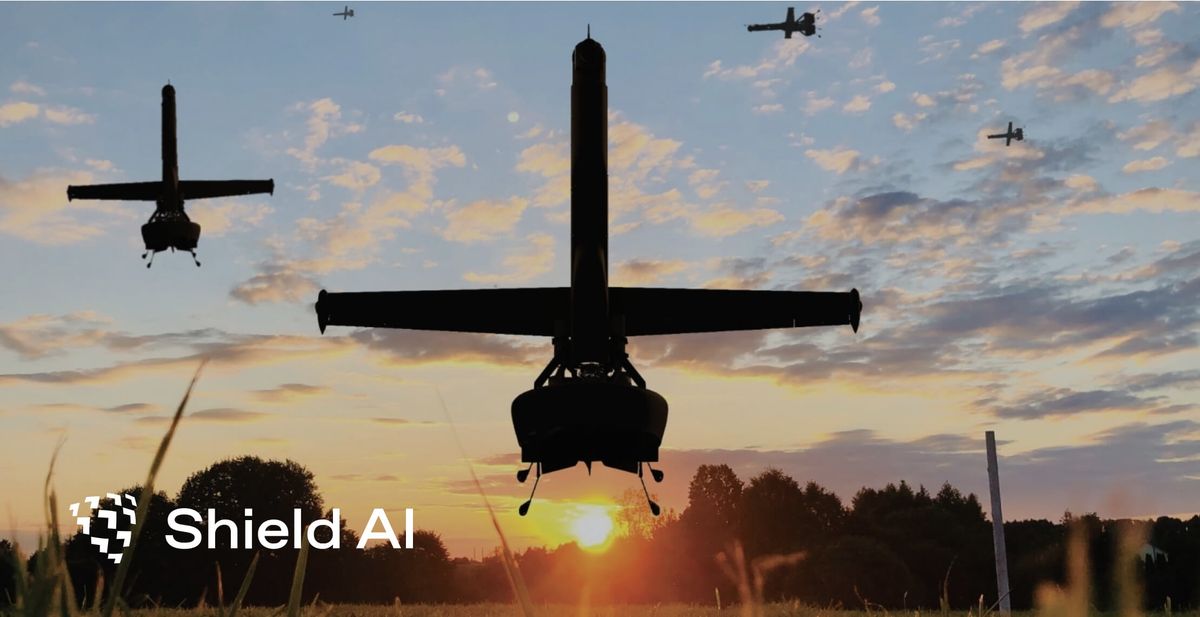
The landscape of modern warfare is shifting toward autonomy, and Shield AI is positioning itself at the center of this revolution. The defense startup recently announced a massive $1.5 billion Series G funding round, catapulting its valuation to $12.7 billion. This represents a staggering 140% increase from its $5.3 billion valuation just one year ago.
A Massive Influx of Capital
The funding round was led by the private equity firm Advent—which has earmarked $1 billion for defense technology—and a JPMorganChase investment group. The capital injection also included:
- $500 million in preferred shares sold to Blackstone.
- A $250 million credit facility for future use.
- Participation from investors like Snowpoint Ventures, Riot Ventures, and Disruptive.
Shield AI is immediately putting this capital to work by acquiring Aechelon Technology, a specialist in high-fidelity flight simulation and training. This move integrates world-class pilot training tech directly into Shield’s autonomous ecosystem.
The Air Force Catalyst
The primary driver behind this valuation surge is Shield AI’s selection for the U.S. Air Force Collaborative Combat Aircraft (CCA) program. The military is betting heavily on “loyal wingman” drones to support manned fighter jets, and Shield’s Hivemind autonomy software is a critical component.
Breaking the Vendor Lock-In
In a strategic twist, the Air Force has selected Shield’s software to operate on the “Fury” autonomous jet developed by Anduril. While Anduril has its own “Lattice” software, the military is prioritizing a modular approach to avoid being tied to a single provider for both hardware and software.
This “open architecture” strategy ensures that the best AI can fly the best airframes, regardless of the manufacturer. While Anduril remains a dominant force—with rumors of a new funding round that could value the company at $60 billion—the Air Force’s decision validates Shield AI as an essential, independent pillar of the next generation of aerial combat.