
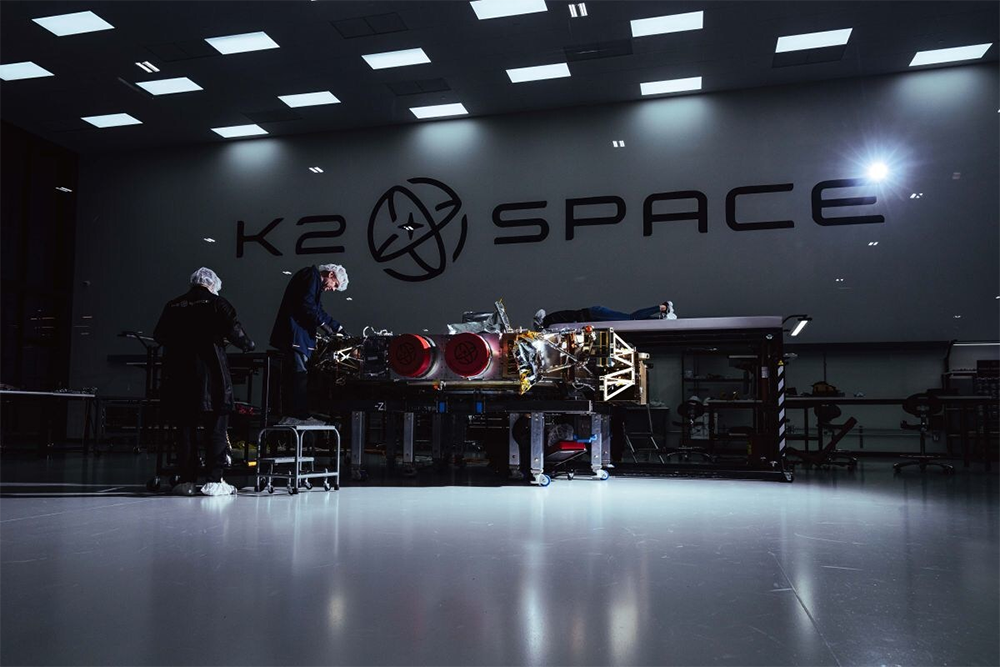
Space is about to get a lot more energetic. K2 Space, a startup founded by former SpaceX engineers Karan and Neel Kunjur, is preparing to launch Gravitas—a high-powered satellite designed to prove that orbital data centers and advanced processors are finally within reach.
The Gravitas Mission
Scheduled to ride a SpaceX Falcon 9 as early as late March 2026, Gravitas is a two-metric-ton behemoth. Once its 40-meter solar wings unfurl, it will generate 20 kW of power. To put that in perspective, while next-generation Starlink V3 satellites aim for similar levels, most current spacecraft operate on just a fraction of that energy.
This mission serves as a critical technology bridge. K2 Space has integrated 12 undisclosed payloads for various customers, including the Department of Defense. Beyond power generation, the satellite features a 20 kW electric thruster—potentially the most powerful ever flown—which the team will use to test maneuvers and raise the craft thousands of kilometers into higher orbits.
The Business Case for “Electrical Clout”
CEO Karan Kunjur believes the industry is at a turning point where “the future is higher power.” This shift is driven by several factors:
- Enhanced Communication: More power enables higher throughput and signals that are much harder to jam.
- Orbital Computing: Running advanced processors in space requires significant electrical overhead, moving beyond simple data relay to active on-orbit processing.
- Cost Efficiency: By building 85% of components in-house, K2 offers Gravitas at a $15 million price point. Even with current launch costs on a Falcon 9, K2 argues their platform is more capable and affordable than traditional high-power alternatives.
Scaling for the Starship Era
With a $3 billion valuation and $450 million in funding, K2 Space is playing a long game. While Gravitas is optimized for today’s rockets, the company has already “taped out” designs for 100 kW satellites that span entire factory floors.
These massive platforms are designed to be ready the moment heavy-lift vehicles like Starship or Blue Origin’s New Glenn become fully operational. This launch is just the first of 11 planned missions over the next two years, marking the start of an iterative journey toward building the backbone of a high-powered orbital economy.