
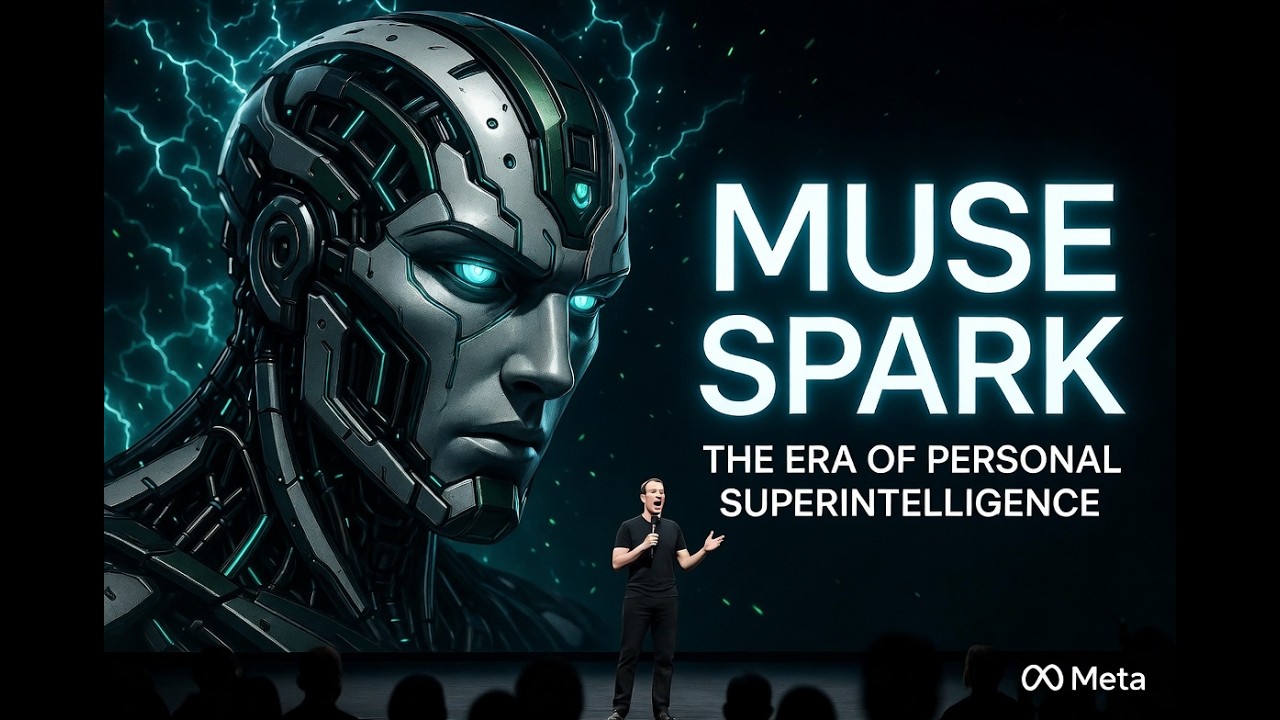
Meta is pivoting. After trailing behind industry leaders like OpenAI and Anthropic, the social media giant has unveiled Muse Spark, a new AI model that represents a total “ground-up overhaul” of its intelligence strategy. This isn’t just a Llama update; it’s the first product from the newly formed Meta Superintelligence Labs.
A Strategic Pivot Under New Leadership
The creation of the Superintelligence Labs follows reported frustration from CEO Mark Zuckerberg regarding the pace of Meta’s previous AI efforts. To lead this charge, Meta recruited former Scale AI co-founder Alexandr Wang. The move was backed by a massive $14.3 billion investment in Scale AI, securing Meta a 49% stake in the data-labeling powerhouse.
Speed Through Parallel Reasoning
Muse Spark, currently available on the web and the Meta AI app, introduces a “Contemplating” mode designed for complex problem-solving. Unlike traditional models that may lag during deep reasoning, Meta utilizes multiple AI agents working in parallel. This collaborative approach allows the system to tackle difficult tasks without the high latency usually associated with “test-time reasoning.”
Practical Applications and Privacy
Meta is positioning Muse Spark as a versatile tool for daily life. Key features include:
- STEM and Troubleshooting: The model excels at visual STEM tasks, from creating interactive minigames to helping users fix home appliances.
- Health Integration: Following industry trends, the model is being optimized to assist with medical and health-related queries.
However, access comes with a trade-off. Users must log in via Facebook or Instagram, raising questions about how Meta utilizes personal data for training its “personal superintelligence.”
The Road Ahead
Zuckerberg’s vision, as shared on Threads, is to move beyond simple chatbots toward “agentic” AI that can perform tasks autonomously. With talent poached from Google and OpenAI, Meta is signaling that its fight for AI dominance has reached a critical “now or never” stage. For those interested in the future of these technologies, the upcoming TechCrunch Disrupt 2026 will likely showcase how these models are being integrated into the broader tech ecosystem.