
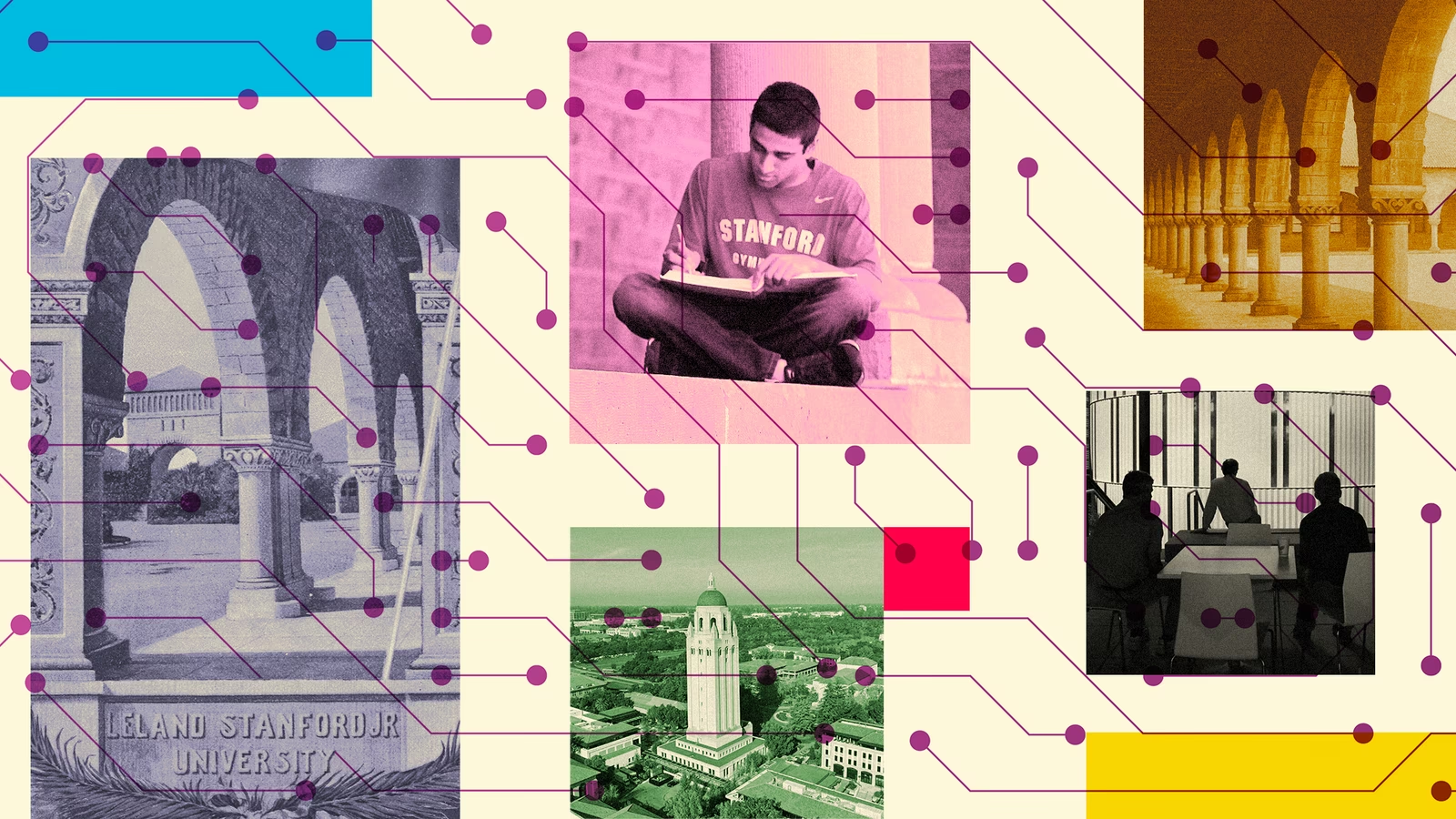
Theo Baker is graduating from Stanford this spring with more than just a degree. He carries a George Polk Award for investigative journalism and a book deal for his upcoming work, How to Rule the World: An Education in Power at Stanford University. His reporting, recently excerpted in The Atlantic, pulls back the curtain on an institution that has evolved from a prestigious university into a high-octane engine for Silicon Valley ambition.
The “Stanford Inside Stanford”
Baker describes an elite, invite-only layer of campus life where the boundaries between education and venture capital have evaporated. In this world, 18-year-olds are wined and dined by investors, receiving “pre-idea” funding worth hundreds of thousands of dollars before they’ve even identified a problem to solve. Startup guru Steve Blank characterizes the modern campus as an “incubator with dorms”—a factory designed to churn out founders rather than scholars.
The Internalized Hustle
The most striking change is how students have internalized this pressure. Fifteen years ago, the weight of Silicon Valley was an external force. Now, freshmen arrive on campus already expecting to raise capital and drop out. The university rarely stands in their way; instead, it offers a “cheerful blessing” to those who leave their education behind to chase a billion-dollar valuation.
The High Cost of the “Anti-Signal”
The human toll of this system is often ignored. Baker highlights the “performance of ambition,” where students learn to act like founders to attract investors. Sam Altman notes that this circuit has become an “anti-signal”—the real builders are often elsewhere, while the performers dominate the spotlight.
Beyond the performative nature of the scene lies a grimmer reality: pervasive fraud and a staggering failure rate. Blank points out that while 100% of these students believe they are visionaries, data suggests 99% are not. For those who “succeed,” the price is often their youth—trading relationships and personal milestones for a cap table.
A Cautionary Tale or a Recruitment Tool?
There is a lingering irony in Baker’s critique. Much like the film The Social Network ended up glamorizing the very behavior it sought to indict, there is a risk that How to Rule the World will simply serve as a roadmap for the next generation. With a movie deal already in place, the book might inadvertently prove that at Stanford, even a scathing critique of power is just another way to achieve it.