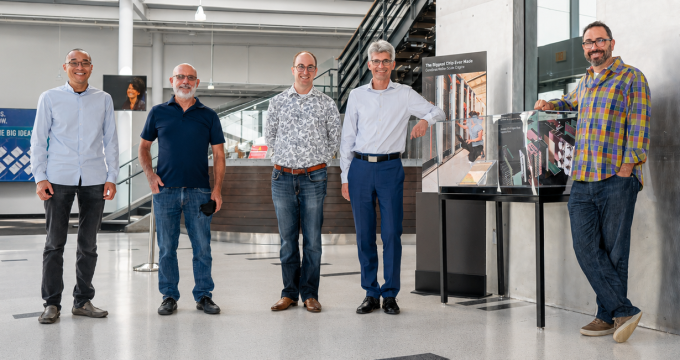
Before Cerebras Systems became a $60 billion AI powerhouse, it was a startup on the verge of financial incineration. In 2019, CEO Andrew Feldman found himself in a recurring “walk of shame,” reporting to his board that the company was burning $8 million every month with nothing to show for it. After exhausting nearly $200 million to solve a single engineering hurdle, the company was weeks away from total collapse.
Rewriting the Semiconductor Rulebook
For decades, the industry followed a standard script: manufacture transistors on a silicon wafer, then dice that wafer into tiny, individual chips. Cerebras’ founders—who previously sold SeaMicro to AMD—bet that AI required a radical departure. They believed that keeping a whole wafer as one giant, interconnected processor would provide the massive compute power AI demands.
The technical barriers were immense. Partnering with TSMC to manufacture the silicon was only the first step. The real nightmare was “packaging”—the process of cooling, powering, and mounting the hardware:
- Scale: The chip was 58 times larger and consumed 40 times more power than any existing processor.
- Custom Tooling: With no existing vendors, the team had to invent a machine that could drive 40 screws simultaneously to mount the wafer without cracking it.
- The Breakthrough: In July 2019, the team finally powered on a functional unit. Feldman describes the moment of seeing the lights flash on the computer as one of the greatest of his life.
The OpenAI Alliance
Cerebras’ survival is now deeply intertwined with OpenAI. While early acquisition talks fell through years ago, the two are now strategic partners. OpenAI provided a $1 billion loan to Cerebras, secured by warrants that, at current prices, are worth billions.
As part of this deal, Cerebras—which also services giants like AWS—is temporarily restricted from selling its high-capacity compute to certain OpenAI competitors. For now, the company is focused on satisfying the immense hunger of its primary partners before expanding its “all-you-can-eat” AI buffet to the rest of the market.