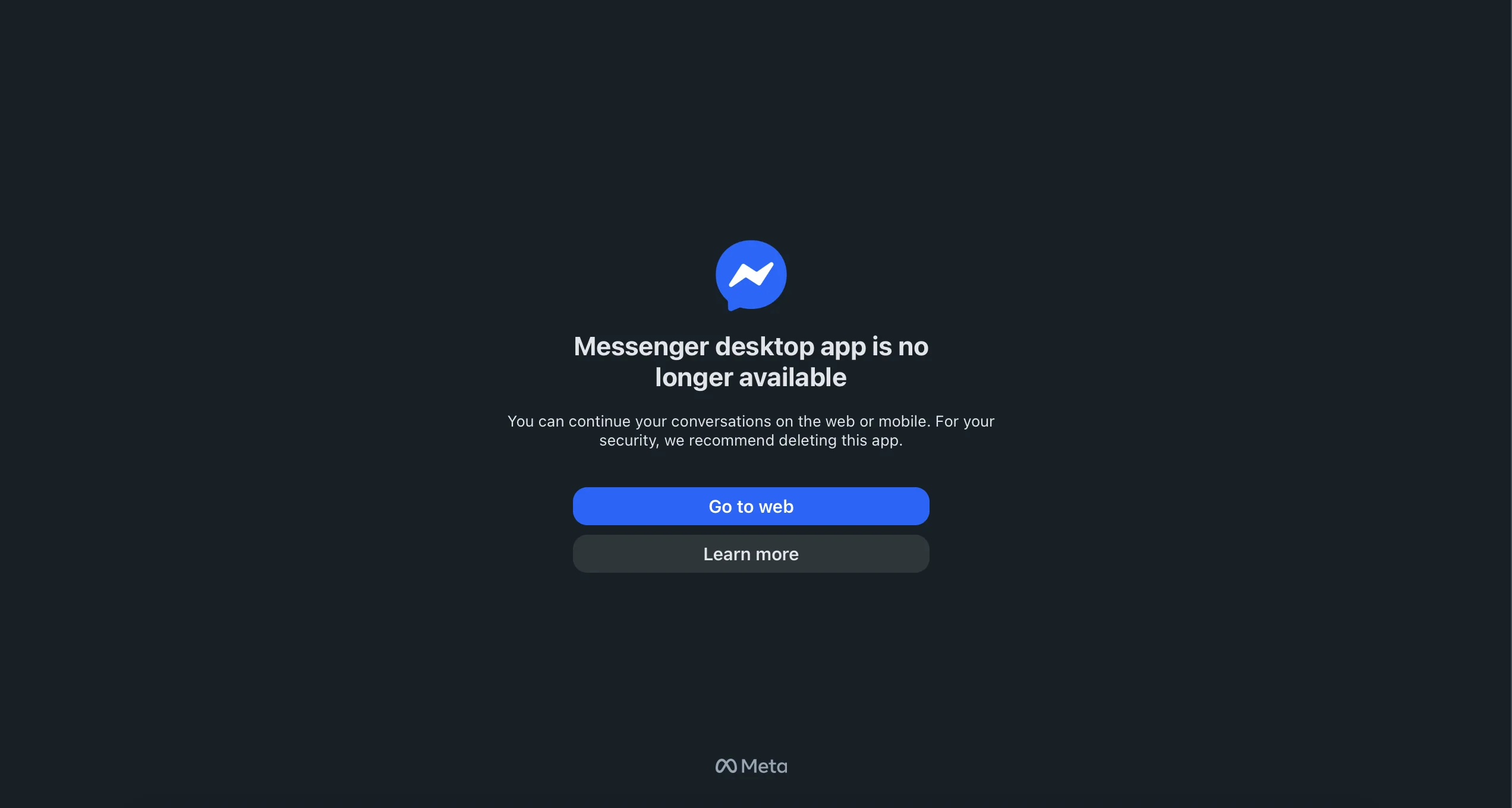
Meta is making a significant change to its digital landscape by officially discontinuing the standalone Messenger website. For years, users who preferred a dedicated workspace for their chats without the distractions of the Facebook news feed could visit the specific Messenger URL to stay connected. However, that era is drawing to a close as the social media giant consolidates its messaging capabilities back into its primary web interface. This move represents a full-circle evolution for the platform, which famously spent years separating its messaging functions into a distinct experience to encourage independent growth and app adoption.
The decision to sunset the dedicated desktop portal is part of a broader internal strategy to simplify Meta’s ecosystem and reduce technical overhead. While the standalone site offered a minimalist, focus-driven interface for direct communication, Meta has observed that the vast majority of users prefer the convenience of having their messages integrated with the broader social network. By merging these services, Meta aims to streamline its infrastructure and ensure that new features, such as enhanced security protocols and generative AI tools, are deployed more efficiently across its web properties. Users who currently navigate to the standalone site will eventually find themselves redirected to the integrated messaging experience on the main Facebook website.
This shift reflects a fundamental pivot in Meta’s organizational philosophy. There was a time when the company believed that unbundling services into specialized applications and websites was the most effective way to capture user attention and dominate specific market segments. Today, the focus has moved toward a unified experience where social networking, content discovery, and private communication coexist seamlessly. Meta has already been reintegrating messaging features into the primary Facebook mobile app for some time, and this latest move on the web is the logical progression of that centralization effort.
For professional users and community managers who relied on the distraction-free environment of the dedicated portal, the transition may require a slight shift in workflow. The integrated messenger sidebar on the main site offers similar functionality, but it lacks the isolated focus that the standalone site once provided. Nevertheless, Meta remains confident that a more cohesive platform will ultimately benefit the user base by reducing the need to jump between different URLs. It is important to note that this change specifically targets the browser-based experience and does not impact the standalone Messenger mobile apps or the native desktop applications for Windows and macOS, which will continue to function as independent tools for the time being.