By giving competing AI chatbots unrestricted access to WhatsApp, Meta hopes to avoid an EU sanction.

You may vibe-code your own widgets using Google’s “Create My Widget” option.

On Tuesday, Google released a new feature for Android called "Create My Widget," which lets users vibe-code their own unique widgets. This summer, the newest Google Pixel and Samsung Galaxy phones will be the first to include the capability. Users will be able to utilize natural language to express what they want when creating a widget. To receive a custom dashboard that you can add and resize on your home screen, you could, for instance, ask the tool to "suggest three high-protein meal prep meals every week." Alternatively, you can make a weather widget that solely displays wind speed and precipitation on your home screen if you are a biker. In order to create a single, customized dashboard, Gemini may also gather data from the internet and integrate with Google apps like Gmail and Calendar. For example, it can collect your travel and hotel information, display restaurant bookings, and even add a countdown if you are organizing a family gathering in Berlin.

By giving competing AI chatbots unrestricted access to WhatsApp, Meta hopes to avoid an EU sanction.

Android has a function that prevents you from doomscrolling.

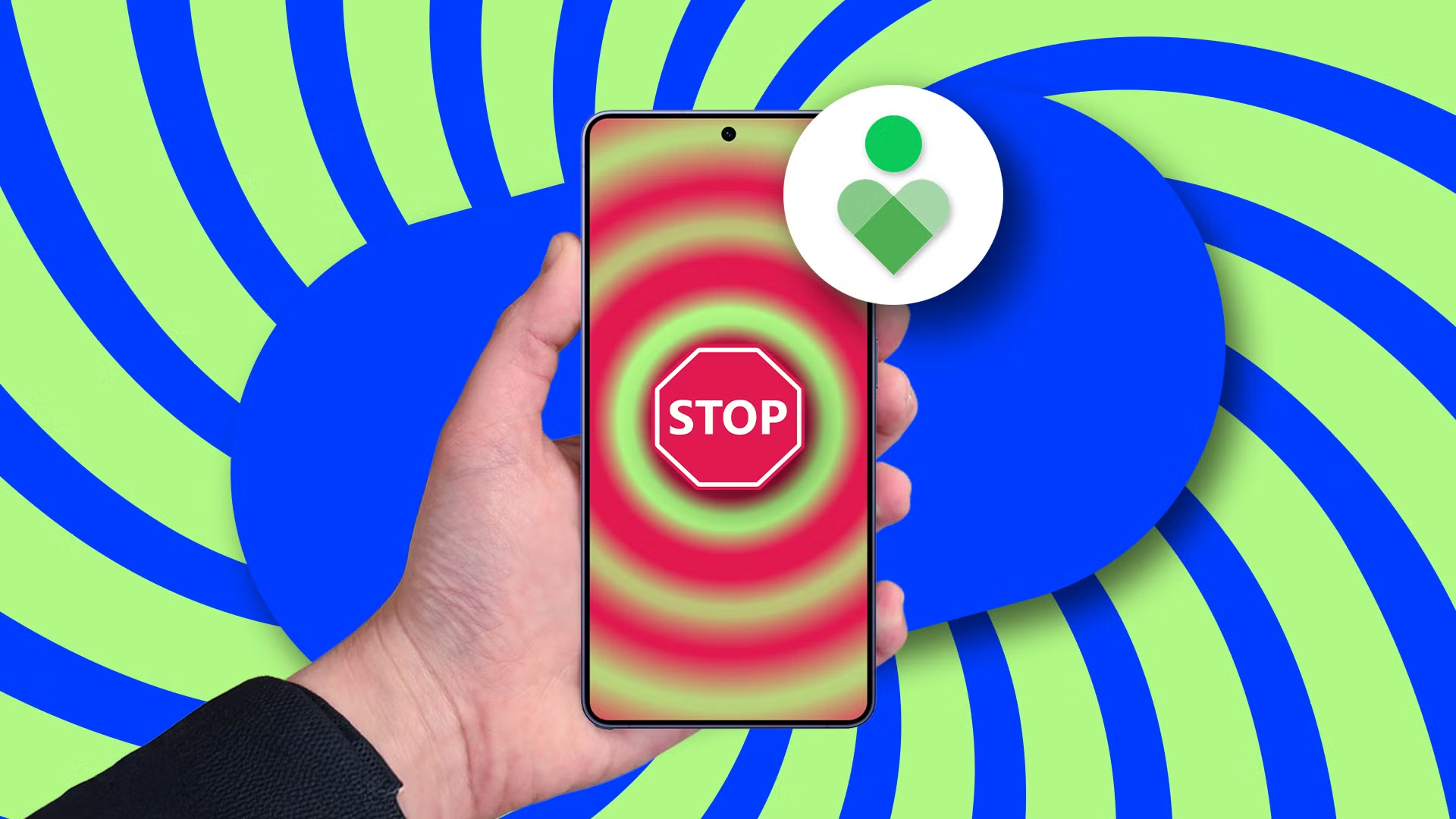
Android now has an anti-doomscrolling feature. (Yes, things have really gotten that terrible.) Google unveiled Pause Point on Tuesday. It is intended to prevent users from interacting with addictive apps on Android, the mobile operating system that runs Samsung devices, Google's Pixel smartphones, and other devices. When you launch any app that you have designated as a distraction, Pause Point requires you to pause for ten seconds. Android device owners who are concerned about the ability of time-sucking algorithms to eat away at their day may classify applications like TikTok, Instagram, X, and even Google's YouTube as "distracting."

By giving competing AI chatbots unrestricted access to WhatsApp, Meta hopes to avoid an EU sanction.

The addition of Gemini-powered dictation to Gboard by Google may be detrimental to dictation startups.

At its Android Show: I/O Edition 2026 event on Tuesday morning, Google unveiled Rambler, a new AI-powered voice dictation function for Gboard, its popular Android keyboard software. With the debut, Google will face competition from a growing number of AI-powered dictation apps, such as Wispr Flow and Typeless, which have gained popularity on desktop and mobile devices in recent years but have not yet established a significant presence on Android. Rambler eliminates filler words like "ums" and "ahs," just like other dictation programs. Additionally, it recognizes mid-sentence adjustments such as "I am going to meet you on Wednesday at our normal coffee shop at 3 p.m.... oh, 2 p.m." Google claimed to use multilingual models based on Gemini that facilitate code swapping. Rambler will follow along without losing context when users switch between languages mid-sentence, for as from English to Hindi. The majority of Western dictation apps have been sluggish to support this feature, which reflects how many multilingual speakers really communicate. According to the business, Gboard will make it obvious to customers that the Rambler function is being used. It just uses audio to transcribe user speech and does not save any voice recordings. During the meeting, Google said that the Rambler feature is similar to "reinventing the keyboard" because it can be used across all apps.

Page 3 of 34 1 2 3 4 34

Welcome Back!

Login to your account below

Retrieve your password

Please enter your username or email address to reset your password.

Add New Playlist