
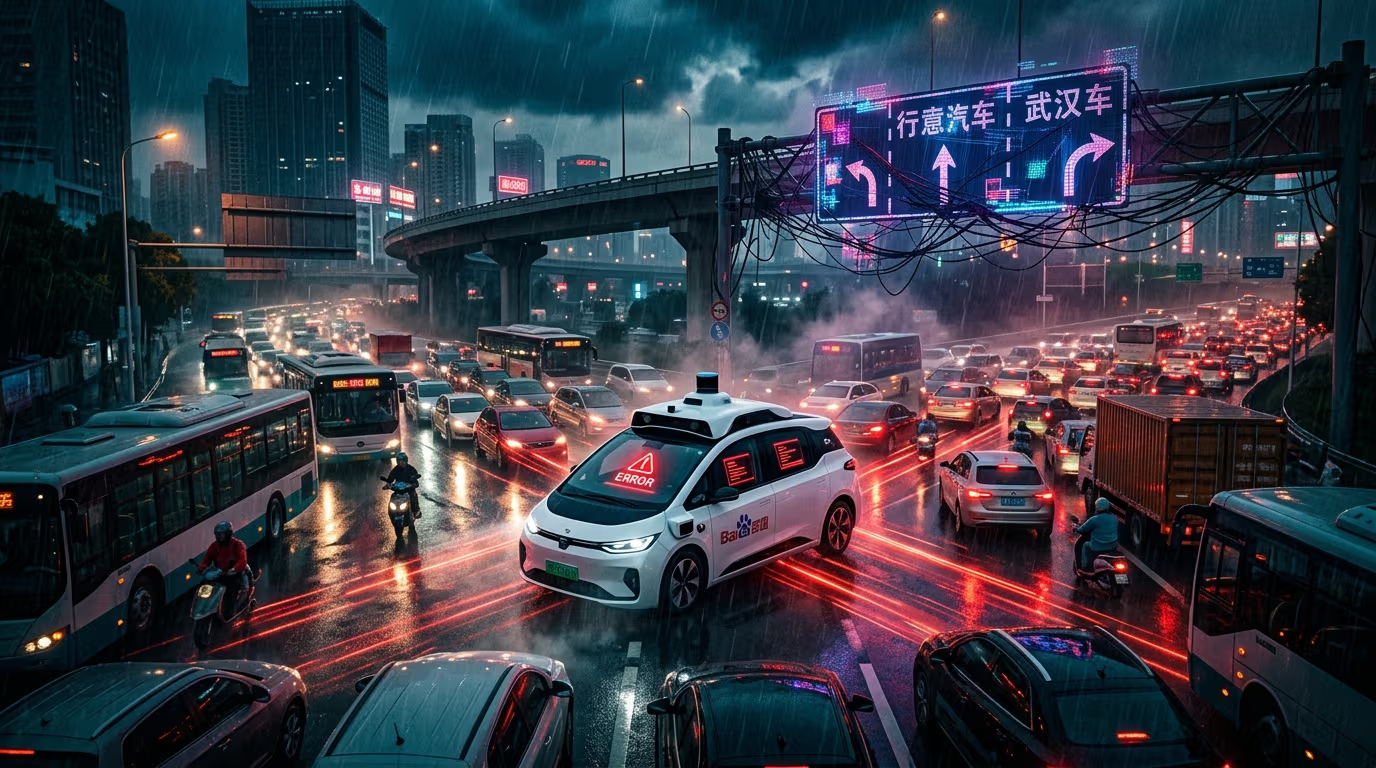
A massive technical glitch recently brought Baidu’s Apollo Go robotaxi operations to a standstill in Wuhan, China. The “system failure,” as described by local law enforcement, left at least 100 autonomous vehicles frozen in place, turning the city’s streets into a landscape of stationary sensors and frustrated passengers.
Trapped in the Fast Lane
The outage wasn’t just a minor inconvenience; it created genuine safety risks. Reports from Reuters and various social media platforms detailed vehicles suddenly stopping in high-speed lanes, leaving passengers stranded inside for as long as two hours. While no injuries were immediately reported, the spectacle of dozens of driverless cars paralyzed in traffic has reignited debates over the reliability of autonomous systems in complex urban environments.
Silence from the Tech Giant
Despite the scale of the disruption, Baidu has remained tight-lipped regarding the specific root cause of the error. While local police continue to investigate the incident, the company has yet to provide a public explanation for why its fleet simultaneously lost the ability to navigate.
Global Ambitions Meet Technical Realities
This failure comes at a pivotal moment for Baidu. As one of China’s leading autonomous driving companies, it is currently pushing for aggressive international growth. The company recently announced plans to deploy over 1,000 robotaxis in Dubai over the next several years, marking a significant expansion into the Middle East. However, widespread outages like the one in Wuhan serve as a stark reminder that the technology is still prone to unpredictable failures that can compromise public safety.
A Growing Pattern of AV Instability
Baidu is not alone in facing these challenges. The autonomous vehicle industry has struggled with infrastructure-related shutdowns globally. For instance, a power outage in California last December caused Waymo vehicles to stall when traffic lights went dark. As companies race to scale, these incidents highlight a critical vulnerability: the heavy dependence of “smart” cars on perfectly functioning software and stable external infrastructure.