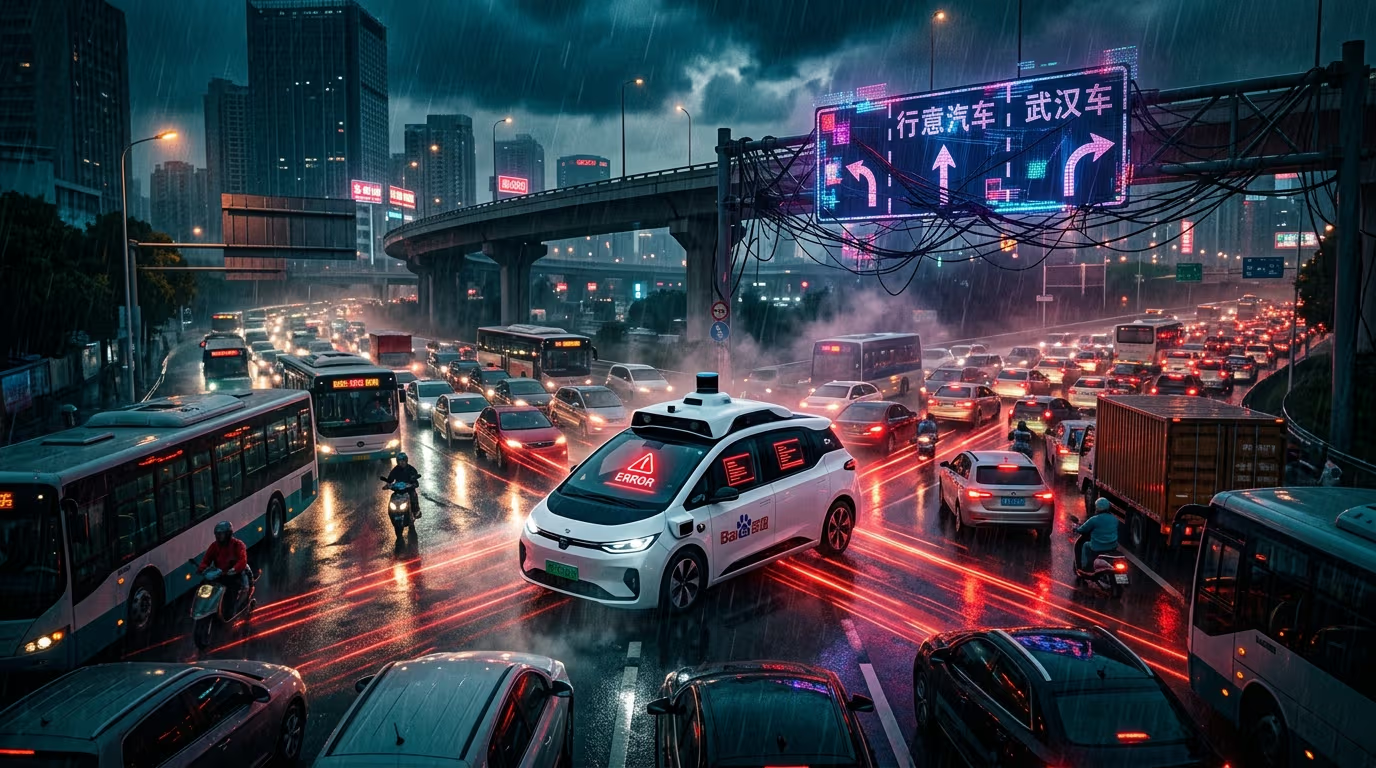
The promise of fully autonomous transportation often ignores a hidden reality: the “ghost in the machine” is frequently a human operator sitting in a call center. While Waymo, Tesla, and others project an image of total machine independence, a recent congressional investigation reveals they are unwilling to disclose exactly how often their software requires a human lifeline.
A Wall of Silence on Human Intervention
Senator Ed Markey (D-MA) recently pressed seven major players—Aurora, May Mobility, Motional, Nuro, Tesla, Waymo, and Zoox—for data on their remote assistance operations. The results were a unanimous stonewall. Every company refused to provide specific metrics on how frequently their vehicles request remote help.
Waymo and May Mobility dismissed these inquiries as “confidential business information,” while Tesla ignored the question entirely. Although Waymo claims its help requests have “materially reduced” as its system improves, it offered no data to back the assertion, noting that many requests are resolved by the car itself before a human even responds.
Diverse Practices, Zero Standards
The investigation exposed a fragmented industry with no unified safety protocols. Key findings include:
- Geographic Disparities: Waymo admitted that half of its remote staff is based in the Philippines. While these workers hold local licenses, critics argue this is no substitute for passing U.S. driving exams.
- Direct Control: Most companies forbid remote workers from steering vehicles. However, Tesla allows operators to assume direct control at speeds under 2 mph to move stuck cars, a maneuver it calls a “final escalation.”
- Latency Issues: Connection delays vary significantly, with May Mobility reporting a worst-case latency of 500 milliseconds.
The Push for Federal Oversight
The lack of transparency has sparked a call for immediate action. Senator Markey is now urging the National Highway Traffic Safety Administration (NHTSA) to investigate these remote operations. With robotaxis and autonomous semis already sharing public roads, the push for strict legislative guardrails is intensifying to ensure that “driverless” doesn’t simply mean “unregulated.”