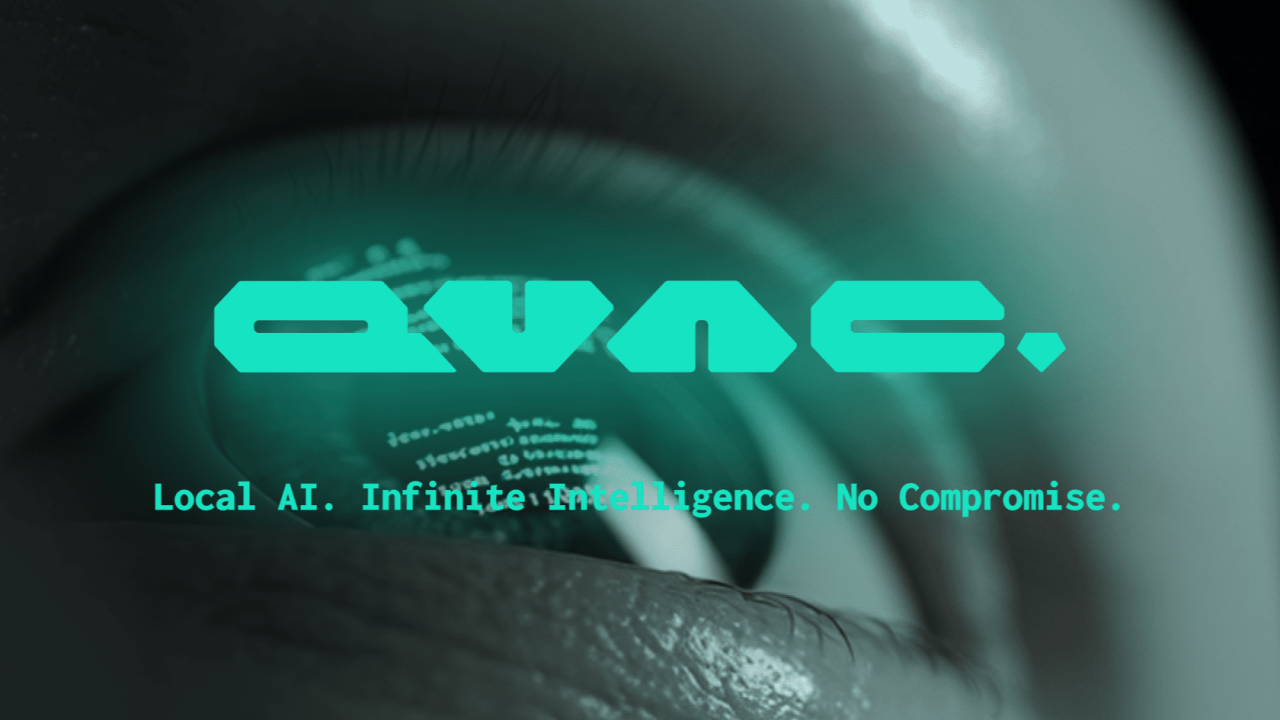
The current AI landscape is defined by a “GPU tax.” As enterprises integrate intelligent applications to automate workflows, they face a bottleneck: the massive cost of centralized cloud computing. Fine-tuning models often doubles the price of base inference, with GPU clusters costing upwards of $4.50 per hour. Tether is challenging this status quo with its Stable Intelligence layer, moving AI away from server farms and directly onto consumer devices.
The QVAC Fabric: High-Performance Local Inference
At the heart of this shift is QVAC Fabric, a high-throughput runtime designed to turn regular hardware into AI powerhouses. Unlike traditional models that require enterprise-grade NVIDIA GPUs, QVAC is hardware-agnostic. It leverages a Dynamic Tiling Algorithm to segment large matrix operations, bypassing the memory constraints that typically hobble mobile chips.
By supporting backends like Vulkan, CUDA, and ROCm, the system runs seamlessly across:
- Desktop GPUs: NVIDIA, AMD, and Intel.
- Mobile Chips: Apple A and M series, ARM Mali, and Adreno.
Breaking the 1-Bit Barrier
Tether’s research team recently achieved a technical milestone by applying Microsoft‘s BitNet 1-bit architecture to a LoRA fine-tuning framework. By compressing model weights to a ternary range (-1, 0, 1), they slashed memory requirements. In a landmark demonstration, Tether successfully fine-tuned a 13-billion-parameter model on an iPhone 16, proving that data-center-level workloads can thrive on edge devices.
A Local-First Ecosystem
To make this technology accessible, the QVAC SDK allows developers to build private, local-first applications. Tether has already launched two flagship products using this stack:
QVAC Workbench
This customizable AI assistant handles coding, research, and scheduling. It utilizes the Holepunch P2P protocol, allowing for delegated inference. For example, a user can start a complex task on their phone and offload the heavy processing to their home workstation securely.
QVAC Health
By processing data locally, QVAC Health offers a private environment for tracking biomarkers, scanning lab reports via OCR, and managing routine upkeep without sending sensitive medical data to the cloud.
Through open-source grants and strategic partnerships, Tether is positioning the QVAC ecosystem to provide equitable superintelligence, ensuring that the future of AI is private, affordable, and owned by the people rather than centralized providers.