The modern office is undergoing a sonic transformation. For decades, the soundtrack of productivity was defined by the rhythmic clicking of keyboards. Today, that sound is being replaced by a low, persistent murmur as professionals increasingly turn to voice-to-text tools and AI-driven workflows.
The Death of the Keyboard?
The shift toward dictation is gaining momentum, fueled by the rise of sophisticated apps like Wispr and the emergence of “vibe coding”—a trend where developers use natural language to prompt AI tools to write software. This evolution is fundamentally altering office etiquette. Venture capitalists have noted that visiting a modern startup now feels less like entering a quiet library and more like stepping into a high-end call center.
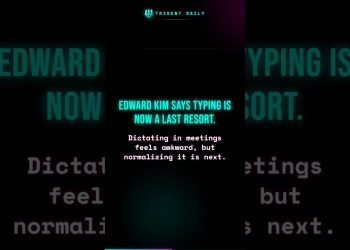
Edward Kim, co-founder of the payroll and HR platform Gusto, has become a vocal proponent of this shift. Kim recently suggested that future offices will eventually mirror the high-energy environment of a sales floor. He admits that he now only types when absolutely necessary, though he acknowledges that dictating in a shared space can still feel “just a little awkward.”
The Social Friction of Voice AI
While the efficiency gains are significant, the transition isn’t without its growing pains. The “whisper office” creates new social and domestic challenges. AI entrepreneur Mollie Amkraut Mueller shared that her habit of whispering to her computer became a point of contention at home, leading her and her husband to work in separate rooms to avoid the constant distraction of one-sided conversations.
A New Social Norm
Despite the current awkwardness, proponents believe we are simply in a transitional phase. Tanay Kothari, the founder of Wispr, argues that vocalizing our thoughts to machines will eventually feel as natural as staring at a smartphone for hours on end. As these tools become more integrated into our daily routines, the sight—and sound—of a room full of people whispering to their monitors may soon become the standard hallmark of a productive workplace.