
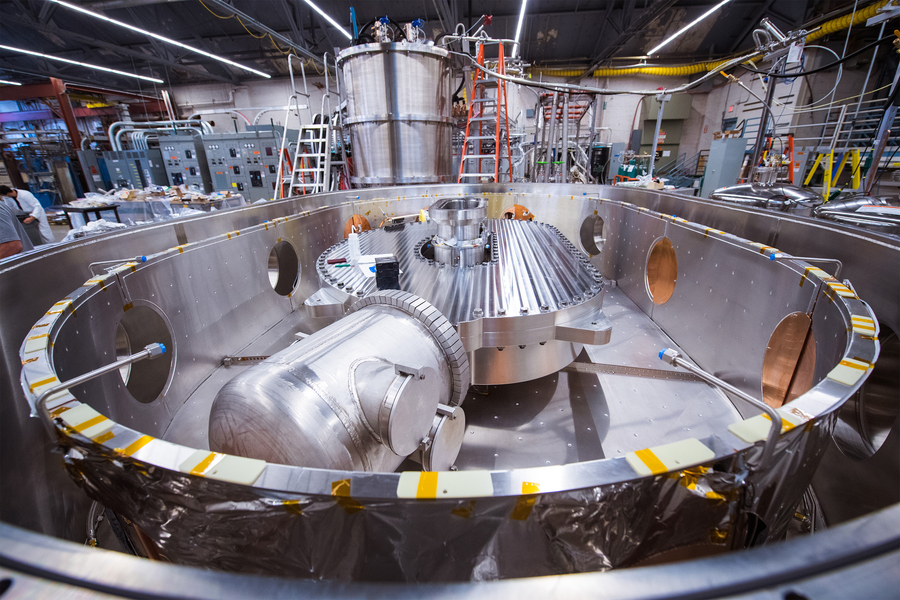
While the dream of commercial nuclear fusion remains on the horizon, Commonwealth Fusion Systems (CFS) has identified a way to generate immediate cash flow: selling the sophisticated components that make fusion possible. The company recently announced a landmark deal to supply high-temperature superconducting (HTS) magnets to Realta Fusion, marking a strategic move to become a primary hardware supplier for the broader industry.
Diversifying the Fusion Ecosystem
This agreement represents the largest commercial magnet sale in CFS history. It follows a previous collaboration with the WHAM experiment at the University of Wisconsin, a project that shares deep technical ties with Realta’s reactor design.
The two companies are pursuing different paths to clean energy:
- Tokamaks: CFS’s own design uses powerful D-shaped magnets to contain plasma in a doughnut-shaped ring. Their demonstration reactor, Sparc, is currently 70% complete.
- Magnetic Mirrors: Realta utilizes a “magnetic mirror” approach, shaping plasma like two connected soda bottles. This design is potentially more cost-effective to scale, as increasing power only requires expanding the middle section of the reactor where magnets are less powerful and cheaper to produce.
Capitalizing on Manufacturing Power
CFS has raised nearly $3 billion to date, an immense war chest that allowed them to build a specialized HTS magnet factory. By selling these magnets to other startups—and licensing technology to stellarator-focused Type One Fusion—CFS can offset the massive investment required to build its manufacturing infrastructure.
According to Chief Commercial Officer Rick Needham, the timing is ideal. With Sparc nearing completion, the factory has the capacity to support external partners without slowing CFS’s internal progress toward its future commercial reactor, Arc. Because Realta is initially targeting industrial heat applications rather than direct grid competition, CFS views them as a partner in the ecosystem rather than a direct rival. This “pick-and-shovel” strategy allows CFS to monetize its research and development while the entire industry races toward a commercial breakthrough.