
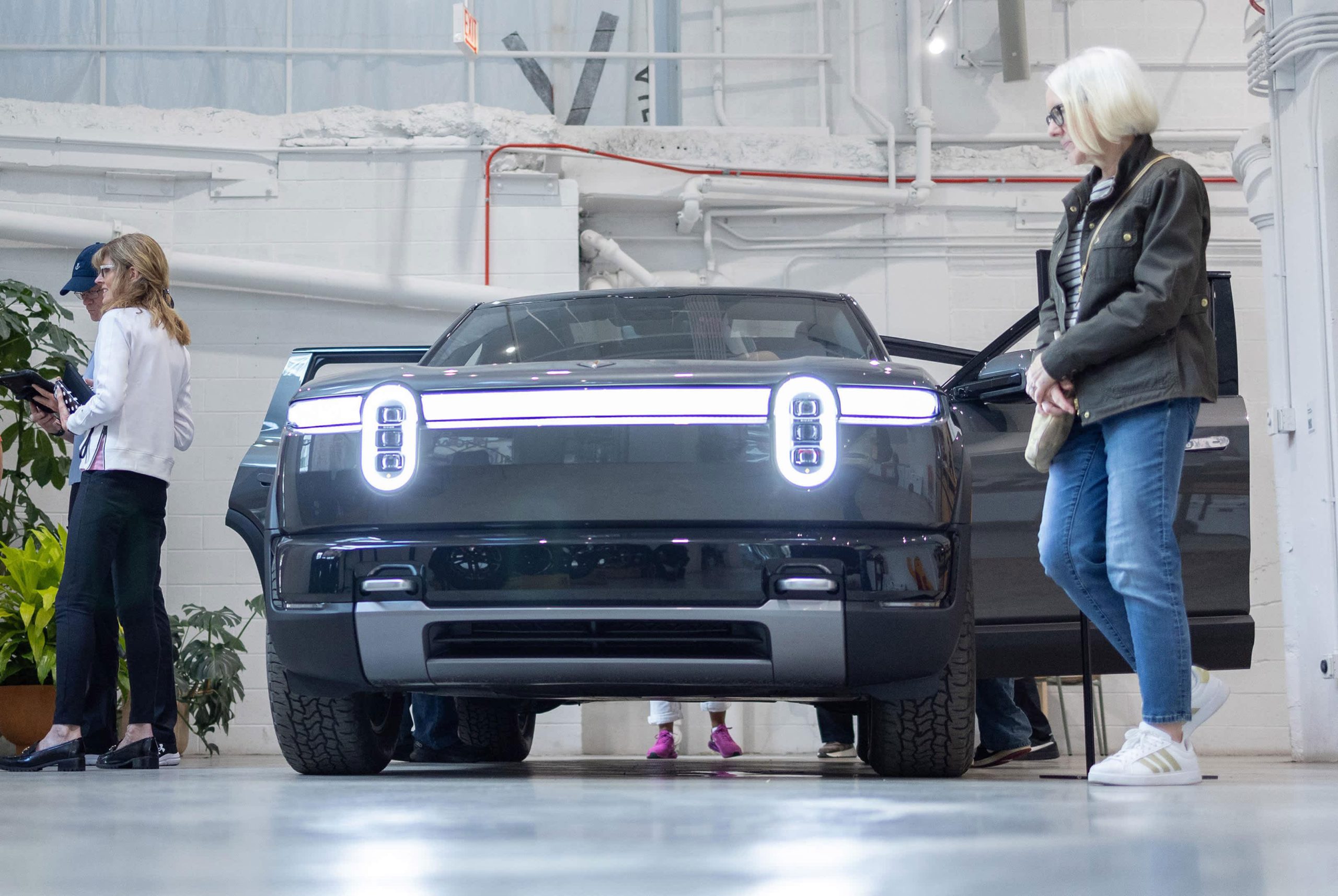
Rivian is recalibrating its expansion plans, opting for a leaner financial approach as it prepares its massive Georgia manufacturing site. The electric vehicle maker recently reworked its agreement with the Department of Energy, reducing its expected loan from an original $6.6 billion to $4.5 billion.
Optimizing the Georgia Expansion
Despite the smaller loan, Rivian is actually accelerating its production goals for the first phase of the Georgia facility. The company now expects the plant to debut with an initial capacity of 300,000 vehicles—a 50% increase over the previous 200,000-unit target. CFO Claire McDonough noted that this shift aims to lower per-unit costs by maximizing the “upper pad” of the site early on.
Key milestones for the Georgia project include:
- Early 2027: Rivian will begin drawing on the DOE loan.
- Late 2028: Expected start of vehicle production.
- Future Growth: A “lower pad” remains untouched for future capacity increases, though total projected capacity now sits at 515,000 units across all sites.
The Uber Alliance and the R2 Robotaxi
A significant portion of this new capacity is earmarked for a strategic partnership with Uber. The ride-hailing giant is investing $300 million initially, with another $250 million planned for later this year. As part of the deal, Uber will purchase 10,000 autonomous R2 robotaxis for deployment in San Francisco and Miami by 2028, with options to acquire 40,000 more by 2030.
Financial Performance and Illinois Operations
While building for the future, Rivian is maintaining steady momentum at its Normal, Illinois factory. That plant, which has a 215,000-vehicle capacity, has already begun producing the R2 SUV, with the first deliveries to employees already underway and customer deliveries expected soon.
In the first quarter of 2026, Rivian reported $1.38 billion in revenue. While the company saw a $1 billion negative free cash flow due to rising R&D and pre-production costs, its net loss narrowed to $416 million. This improvement was bolstered by a $506 million gain from the capital raise and deconsolidation of Mind Robotics, a new venture by CEO RJ Scaringe.