
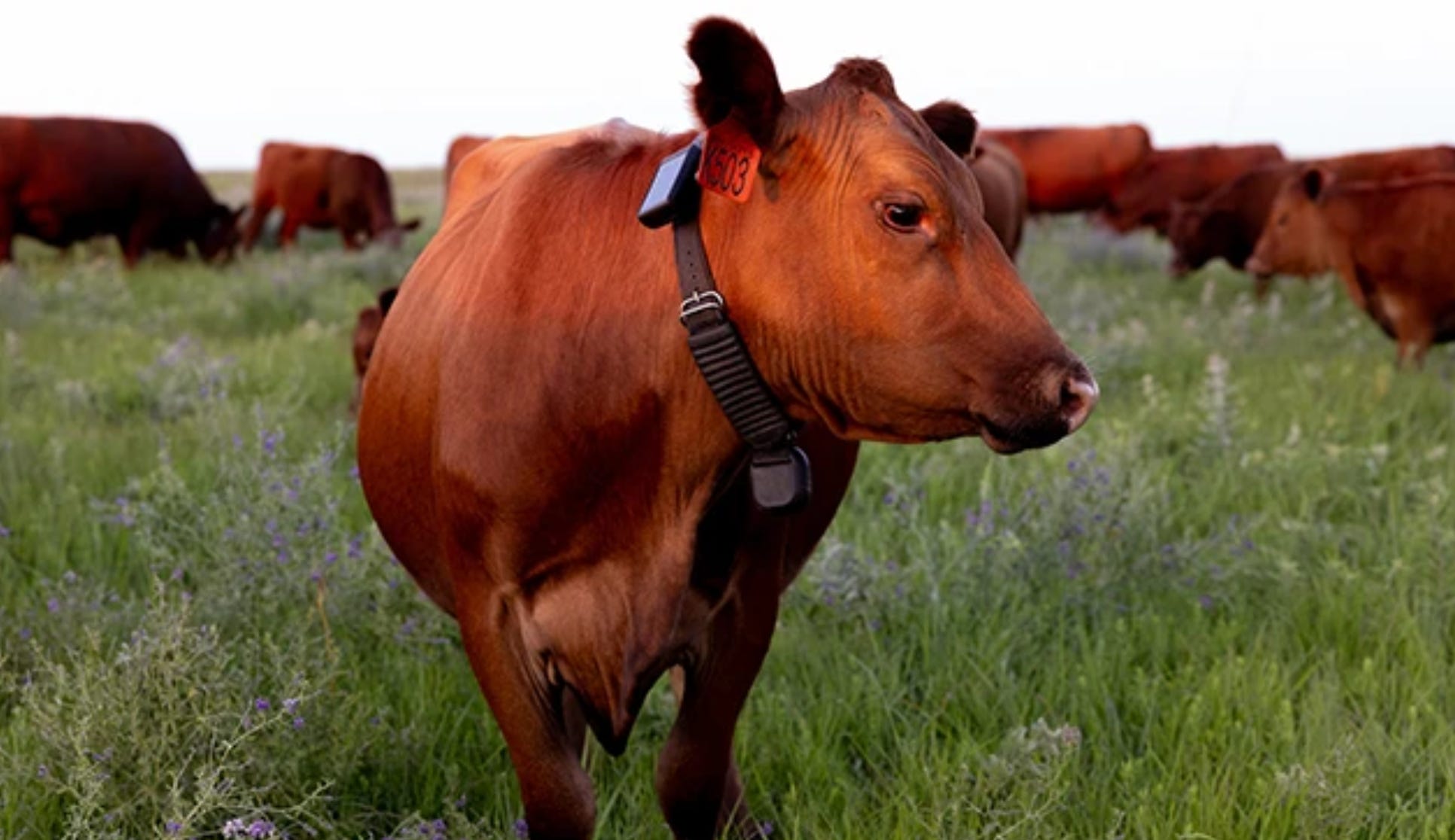
While the tech world is currently obsessed with generative AI and humanoid robots, Peter Thiel’s Founders Fund is placing a massive bet on a more grounded frontier: the pasture. The firm recently led a $220 million Series E funding round for Halter, a New Zealand-based startup that has developed solar-powered smart collars for cattle. This latest investment pushes Halter’s valuation to $2 billion, signaling a major shift in how venture capital views the agricultural sector.
Breaking the Physical Fence
The core of Halter’s innovation is “virtual fencing.” Managing livestock in remote, rugged terrain traditionally requires a small army of dogs, horses, and motorbikes. Halter replaces this manual labor with a sophisticated system of solar-powered hardware and low-frequency towers.
How the Technology Works
- Audio and Vibration Cues: Instead of physical barriers, cattle are trained to respond to sound and vibrations from their collars. Most animals learn to stay within virtual boundaries after just three interactions.
- Remote Management: Through a smartphone app, farmers can shift herds and monitor grazing patterns without leaving their homes.
- Data-Driven Health: The collars provide 24/7 monitoring, tracking fertility cycles and flagging early signs of illness through behavioral data.
From Rockets to Ranches
Halter’s founder and CEO, Craig Piggott, brought an aerospace mindset to the farm. A former engineer at Rocket Lab, Piggott applied the high-reliability standards of space tech to agriculture. He notes that for a system managing thousands of animals, even a 1% failure rate is unacceptable. This focus on “many nines” of reliability is what allowed Halter to scale across New Zealand, Australia, and 22 U.S. states.
A Massive Economic Opportunity
The primary appeal for farmers isn’t just convenience; it is a significant boost in ROI. By precisely controlling grazing, Halter can increase land productivity by up to 20%. In some instances, farmers have even doubled their output by ensuring pasture is used more efficiently.
The Competitive Landscape
Halter isn’t the only player in this space. Pharmaceutical giant Merck offers its own virtual fencing solution called Vence, and newcomers like Grazemate are exploring the use of autonomous drones. However, Piggott remains confident that the collar is the superior form factor for long-term livestock management.
With roughly one billion cattle globally and Halter currently serving just one million, the growth potential is staggering. As the company expands into South America and Europe, it aims to prove that the most impactful “zero to one” innovations are sometimes found in the middle of a field.